
Psoriasis Treatment in Tampa & Dade City, FL

Psoriasis can disrupt your daily life in unexpected ways. Flare-ups can make it difficult to do your job or make you feel uncomfortable in social situations due to visible patches. Constant itching can even affect your sleep, causing fatigue during the day. If you hope to regain control of your life, Florida Westcoast Skin and Cancer Center can help.
With locations in Tampa and Dade City, Florida, our team includes board-certified dermatologists Dr. Michael A. Scannon and Dr. Stefanie Altmann. They have decades of experience treating psoriasis with clinical therapies, including light-box treatments, biologics, and more.
What Is Psoriasis?
Psoriasis is a common, chronic skin condition. The result of a rapid buildup of skin cells, psoriasis causes red, raised, dry, and cracked scaly patches, and even blisters, to form on the skin. In some cases, psoriasis affects the fingernails, causing yellowing and small depressions. Psoriasis can be mild, moderate, or severe and, in most cases, causes itching and burning in affected areas.
Psoriasis is an autoimmune disorder in which skin cells replace themselves every 3 to 4 days, rather than the usual 30 days, leading to a buildup of cells on the skin's surface and causing symptoms on the scalp, elbows, knees, hands, feet, and genitals. Although there is no cure, several treatments are available to relieve symptoms effectively. In the United States, more than seven million men, women, and children have psoriasis.
Causes of Psoriasis
Psoriasis is caused by an immune-system disorder involving a type of white blood cell called a "T lymphocyte" (T cell). Although T cells usually travel through the body to fight viruses and other foreign invaders, in patients with psoriasis, they attack healthy skin cells. This increases the production of healthy skin cells, which then build up on the skin's surface, leading to scaling and patches. The symptoms of psoriasis can worsen as a result of certain triggers, including the following:
- Infections
- Injury to the skin
- Stress
- Smoking
- Alcohol consumption
Certain medications can also trigger psoriasis.
Psoriasis Symptoms
Symptoms of psoriasis vary depending on each patient, but often include the following:
- Red patches of skin covered with silvery scales
- Crusting
- Dry, cracked skin
- Itching or burning
- Soreness
- Thickened nails
For many people who have it, psoriasis is merely a cosmetic issue. In some cases, however, it causes severe pain, especially when associated with arthritis. The symptoms of psoriasis usually come and go; it is a cyclic disorder, with remissions and flare-ups occurring throughout a patient's life.
Types of Psoriasis
There are seven types of psoriasis, each with distinct symptoms. Some types are more common than others. Although patients usually have only one type of psoriasis at any given time, another type can appear after the first clears.
Plaque Psoriasis
Plaque psoriasis is the most common type; it affects about 80 percent of psoriasis patients. It causes raised, red lesions covered with silvery-white scales, which usually appear on the elbows, knees, scalp, and back.
Guttate Psoriasis
Guttate psoriasis usually begins during childhood or early adulthood. It causes small red spots on the torso, arms, and legs and is associated with bacterial infections, such as strep throat.
Inverse Psoriasis
Inverse psoriasis develops in the armpits or groin, under the breasts, or in other folds of skin. It manifests itself as bright-red lesions that can become irritated from sweat and friction. It is most common in overweight patients.
Pustular Psoriasis
Pustular psoriasis causes white, pus-filled blisters that are surrounded by red areas of skin. It is often triggered by medication, ultraviolet light, pregnancy, or infection, and is most common in adults.
Erythrodermic Psoriasis
Erythrodermic psoriasis is the least common type of psoriasis. It often causes redness and scaling throughout the body and can lead to serious illness if left untreated.
Nail Psoriasis
Nail psoriasis affects the nails, causing them to thicken and yellow and develop small pits in the nail bed. Patients with nail psoriasis are also likely to have a fungal infection.
Psoriatic Arthritis
Psoriatic arthritis is a combination of psoriasis and arthritis. It can cause swelling, pain, and joint discoloration, in addition to the skin symptoms of psoriasis.
Psoriasis Treatment Options
Treatment for psoriasis focuses on clearing the skin of current symptoms. Treatments for the root cause of psoriasis aim to interrupt the abnormal cycle that drives increased skin cell production. This can be achieved through topical treatment, oral medication, light therapies, or a combination of the three.
Topical Treatment
Topical psoriasis treatment usually includes corticosteroids, vitamin D, or topical retinoids. These topical medications target inflammation, skin cell growth, and DNA activity to treat the symptoms of mild-to-moderate psoriasis effectively.
Light Therapy
Light therapy may be used in combination with topical treatments to slow the production of skin cells and improve the overall appearance of the skin. Light therapy includes exposure to natural sunlight or narrowband ultraviolet-B light.
Oral Medication
Oral medications may be prescribed for severe psoriasis or for patients who are unresponsive to other treatments. Prescription oral medications include retinoids, methotrexate, or cyclosporine.
Lifestyle Changes
Patients with psoriasis can help relieve symptoms by keeping the skin clean and moisturized, covering the affected areas while sleeping, and avoiding catalysts such as stress, smoking, and alcohol. By adhering to a doctor's treatment plan and following the recommended home remedies, effective relief from psoriasis is possible.
Myths About Psoriasis
Psoriasis is often misunderstood, leading to unnecessary stigma and confusion for those affected. Here are some of the most common myths about psoriasis and the facts that debunk them:
- Myth: Psoriasis is contagious.
Fact: Psoriasis is not contagious. It's an autoimmune condition and cannot be spread through touch or close contact. - Myth: Poor hygiene causes psoriasis.
Fact: Hygiene has no role in causing psoriasis. It is caused by an overactive immune system, not personal habits. - Myth: Psoriasis is just a skin condition.
Fact: Psoriasis can also affect the joints (psoriatic arthritis) and is linked to other health issues like heart disease and diabetes. - Myth: Only adults get psoriasis.
Fact: Psoriasis can occur at any age, including in children. While more common in adults, pediatric cases are not unusual.
Why Choose Florida Westcoast Skin and Cancer Center for Psoriasis Treatment in Tampa?
Our experienced dermatologists at Florida Westcoast Skin and Cancer Center are ready to help you. Dr. Michael A. Scannon has been practicing dermatology since 1982 and has advanced training from Emory University and the University of South Florida. He specializes in treating psoriasis with methods such as light-box therapy, X-trac laser, and biologic therapy, as well as managing skin cancer with radiation therapy in the Tampa office. Dr. Scannon has served as the Medical Director for the National Psoriasis Foundation's West Coast chapter and actively participates in research to advance treatment options.
Dr. Stefanie Altmann is a board-certified dermatologist with expertise in medical, surgical, and cosmetic dermatology. She provides care for a variety of skin conditions and has advanced training in Mohs surgery for skin cancer. With their extensive training, the team at Florida Westcoast Skin and Cancer Center works with patients to meet their dermatologic needs in Tampa and Dade City.
Psoriasis FAQs
What is parakeratosis?
Is It Possible To Have Psoriasis and Another Skin Condition at the Same Time?
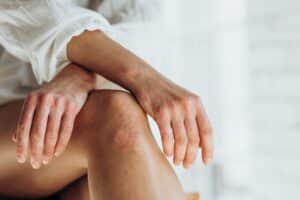
Many skin diseases can accompany psoriasis; they include fungal and yeast infections, scabies, cutaneous (skin) lymphoma, and cutaneous manifestations of syphilis. Although they share many symptoms, psoriasis and eczema are rarely co-occurring. And psoriasis may actually reduce a person's risk of eczema, perhaps because the immune system responds differently to the two conditions.
Does Psoriasis Make a Person More Susceptible to Infection?
Psoriasis itself is only associated with an increased risk of infection when skin plaques or pustules are invaded by the harmful bacterium Staphylococcus aureus. The risk of infection is greater when the skin's surface is broken by excessive scratching. Proper hygiene, antibacterial products, and other preventive measures may be recommended to reduce the risk of infection.
Does Psoriasis Cause Hair Loss?
Temporary hair loss may result from removing thick scalp scales that trap hair or from certain medications, such as salicylic acid.
Does Psoriasis Worsen During the Winter?
Low humidity leads to dry, itchy skin in the winter, often prompting scratching, picking, and scrubbing, and the formation of new lesions. To prevent this, using a moisturizer is recommended, as is patting the skin dry rather than rubbing it after bathing.
Can a Skin Injury Lead to a New Lesion?
Yes. This condition is known as Koebner's phenomenon. Psoriasis patients with Koebner's phenomenon can develop a psoriatic lesion at the site of a skin injury or in the same place as another skin condition. About 10 percent of psoriasis patients develop a psoriatic lesion each time the skin is injured. Lesions are especially likely to form at an injury site when psoriasis is active.
Does Sunlight Affect Psoriasis?
Natural sunlight in moderation can lessen the effects of psoriasis. In fact, psoriasis is sometimes treated using ultraviolet light.
Can Psoriasis Be Cured?
Although there is currently no cure, many cases of psoriasis can be successfully treated, with outbreaks not occurring for months or years.
What Is the Treatment for Psoriasis?
Treatment for psoriasis focuses on clearing the skin of current symptoms. Treatments for the root cause of psoriasis aim to interrupt the abnormal cycle that drives increased skin cell production. This can be achieved through topical treatment, oral medication, light therapies, or a combination of the three.
Are There Any Home Remedies for Controlling Psoriasis?
Patients with psoriasis can help relieve symptoms by keeping the skin clean and moisturized, covering the affected areas while sleeping, and avoiding catalysts such as stress, smoking, and alcohol. By adhering to a doctor's treatment plan and following the recommended home remedies, effective relief from psoriasis is possible.
How Do I Know if My Psoriasis Is Mild, Moderate, or Severe?
Psoriasis is classified based on the extent of skin involvement and its impact on daily life. Mild psoriasis covers less than 3% of the body, moderate affects 3-10%, and severe covers more than 10% or significantly disrupts quality of life.
What Should I Ask My Doctor About My Psoriasis Treatment Plan?
Ask about the best treatment options for your symptoms, possible side effects, how long treatments take to work, and what to do if a treatment isn't effective. You should also ask about managing triggers and preventing flare-ups.
Can Psoriasis Affect the Eyes or Vision?
Yes, psoriasis can lead to eye conditions such as uveitis, which can cause redness, pain, and vision problems. It is important to report any eye discomfort to your doctor for prompt evaluation and treatment.
What Role Does Climate Play in Psoriasis Symptoms?
Climate can significantly affect psoriasis. Cold, dry weather may worsen symptoms, while moderate sunlight and humidity can often improve them. However, too much sun can lead to sunburn, which may trigger flare-ups.
Is Psoriasis Hereditary?
Yes, genetics can play a role in psoriasis. If one or both parents have psoriasis, the likelihood of developing it increases, but environmental factors also contribute.
What Is the Difference Between Psoriasis and Eczema?
Psoriasis causes thick, raised patches of red skin with silvery scales, while eczema often causes itchy, red, inflamed skin without scales. Eczema is more commonly linked to allergies, while psoriasis is an autoimmune condition.
Can Psoriasis Cause Fatigue or Affect Energy Levels?
Yes. Psoriasis involves immune system activity that can raise inflammation throughout the body. When inflammation is elevated, many people experience fatigue, sluggishness, or low energy.
In some cases, related conditions such as psoriatic arthritis, anemia, or depression may further contribute to fatigue. Managing symptoms, improving sleep routines, and addressing underlying inflammation with medical treatment can often help patients regain steadier energy levels throughout the day.
Is Scalp Psoriasis the Same as Dandruff?
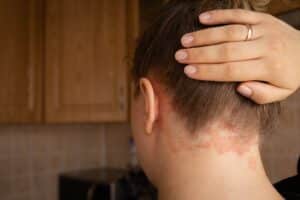
Psoriasis patches may extend beyond the hairline, feel sore, or lead to temporary hair shedding when scales loosen. Scalp psoriasis also, in many cases, requires prescription treatments, medicated shampoos, or light-based therapies. Dandruff generally responds to over-the-counter shampoos.
A dermatologist can clearly distinguish between the two and recommend the most helpful approach.
Does Psoriasis Increase the Risk of Cardiovascular Issues?
Studies, including one published by Frontiers in Cardiovascular Medicine, show that psoriasis, particularly moderate-to-severe forms, is associated with a higher cardiovascular risk. The condition involves ongoing inflammation that can influence blood vessels and contribute to plaque buildup over time. People with psoriasis may also be more likely to have related risk factors such as high cholesterol, high blood pressure, or metabolic syndrome.
Treating psoriasis and maintaining regular medical checkups can support long-term health by helping manage inflammation. Lifestyle habits such as nutritious eating, regular activity, and limiting alcohol or smoking may further support heart health in individuals with psoriasis.
Can Weight Changes Impact Psoriasis Flare-Ups?
Yes. Weight can influence psoriasis symptoms because excess body fat releases inflammatory chemicals that may worsen flare-ups. Skin folds may also trap moisture and friction, which can aggravate certain types of psoriasis, such as inverse psoriasis.
Many patients report improvement when they reach a healthier weight, though results vary from person to person. Even modest changes may help reduce triggers and improve treatment response.
A balanced eating plan and regular activity can support both general wellness and symptom control. Working with a medical provider can also help patients make gradual, sustainable changes that support clearer skin.
How Long Does It Typically Take To See Results From Biologic Treatments?
Most people begin noticing changes within the first few weeks of starting a biologic, but the full benefit often develops over several months. The timeline depends on the specific medication, dosage, and how active the condition is at the start.
Many patients see reduced redness, scaling, and itching early on, followed by steady clearing of plaques. Regular follow-ups allow the provider to monitor progress and make adjustments if needed. Even when improvements take time, biologics can offer long-term symptom relief for many individuals.
Are Psoriasis Flares Linked To Hormonal Changes?
Hormonal shifts can influence psoriasis in some people. Periods of change — including puberty, pregnancy, and menopause — may alter immune activity or skin behavior, leading to either improvement or flare-ups.
Some patients notice increased symptoms around menstrual cycles due to fluctuations in estrogen and progesterone. Pregnancy may bring temporary relief for some, while others experience worsening symptoms. After childbirth, flare-ups can reappear as hormone levels return to baseline.
Because responses vary widely, it's helpful to track symptoms and discuss any patterns with a dermatologist, who can adjust treatment during times of hormonal change.
Contact Us for Psoriasis Treatment in Tampa & Dade City
If you are interested in learning more about our psoriasis treatments or would like to determine whether you are a candidate for treatment, be sure to book a one-on-one consult with one of our top doctors. Call (813) 877-4811 (Tampa) or 352-567-3563 (Dade City) to reach our office or fill out the appointment request form on this page!